How to Snowboard: A Beginner's Guide to Your First Day
By Justin McKelvey · Updated
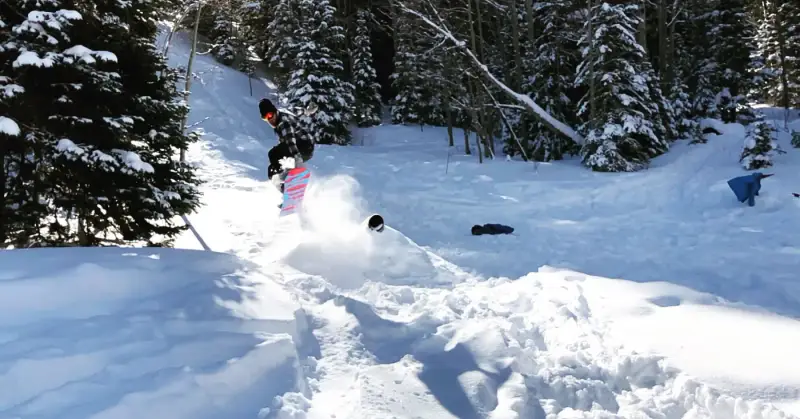
Short answer: take a beginner lesson, rent a soft, shorter board and boots that fit snugly, and learn in this order: strapping in, standing up, sliding on your heel edge, the falling leaf, then linking turns. Expect to fall a lot on day one; most people start linking turns on day two or three.
Before you go: what to book
- A lesson. Snowboarding has a steeper first day than skiing, and an instructor will get you past it faster. Many resorts sell first-timer packages that bundle a lesson, rentals, and a beginner lift ticket.
- Rentals. Ask for a beginner board, which is softer and more forgiving. Use the snowboard size calculator to know roughly what length to expect.
- Protection. A helmet, wrist guards, and padded shorts make falling much less painful. Beginners tend to fall on their wrists and tailbone.
- The right clothes. Waterproof pants matter more for snowboarders, since you sit in the snow to strap in. Here's what to wear.
Step 1: Find your stance
You'll ride with one foot forward. Regular means left foot forward; goofy means right foot forward. If you're unsure, think about which foot you'd put forward to slide across a kitchen floor in socks. The rental shop will set your bindings for your stance.
Step 2: Strapping in and skating
Strap your front foot in first, ankle strap then toe strap, snug but not painful. With your back foot free, practice "skating": push along flat ground with the free foot, like a skateboard. This is how you'll move through lift lines and flats.
Step 3: Standing up
With both feet strapped in, sit facing downhill with the board across the slope. Bend your knees, pull the board close, grab the toe edge, and push up with your hands as you shift your weight forward over the board. From your knees facing uphill, it's easier: push straight up.
Step 4: The heel-edge slide
Stand facing downhill with the board across the slope. Lift your toes slightly so you're balanced on your heel edge. Ease off the edge to slide down slowly, and dig it back in to stop. Then try the same on your toe edge, facing uphill. Controlling speed with an edge is the foundation of everything else.
Step 5: The falling leaf
Stay on your heel edge and shift your weight toward your front foot to drift one way across the slope, then toward your back foot to drift the other way, like a leaf falling side to side. It teaches you to steer without ever pointing straight downhill.
Step 6: Your first turns
Start traversing on your heel edge, then look and turn your shoulders toward where you want to go. Let the board point downhill briefly, shift your weight to your front foot, and roll onto your toe edge to finish the turn. The move from heel edge to toe edge is the hardest part of learning, and it's where most falls happen. Commit to the front foot; hanging back makes the board skid away.
Step 7: Riding the chairlift
Ride with your front foot strapped in and your back foot free. Sit when the chair arrives and rest the board on your free foot or the footrest. To unload, put your free foot on the board against the back binding, stand as the board touches the ramp, and glide straight off. Move out of the way before strapping in.
How to fall more safely
- Keep your hands in loose fists; don't reach out with straight arms.
- Falling forward: drop to your knees and forearms.
- Falling backward: sit down and roll onto your back, tucking your chin.
Pick a good day for learning
Soft, groomed snow is far easier to learn on than ice. A day or two after a storm, once runs are groomed, is ideal. Check where it's snowing this week and look for a resort with a gentle beginner area and a slow lift or carpet.
FAQ
Is snowboarding hard to learn?
The first day or two are hard, with lots of falls while you learn to use your edges. Once you can link turns, most people progress quickly.
Should I ride regular or goofy?
Regular means left foot forward and goofy means right foot forward. Pick the foot you would naturally put forward to slide on a slippery floor; a rental shop or instructor can help you check.
How long does it take to learn to snowboard?
Most beginners can make basic turns on easy runs after two to three days, especially with a lesson.
What should beginners wear snowboarding?
Waterproof jacket and pants, synthetic or wool base layers, gloves or mittens, goggles, a helmet, and optionally wrist guards and padded shorts.