How to Turn and Carve on a Snowboard
By Justin McKelvey · Updated
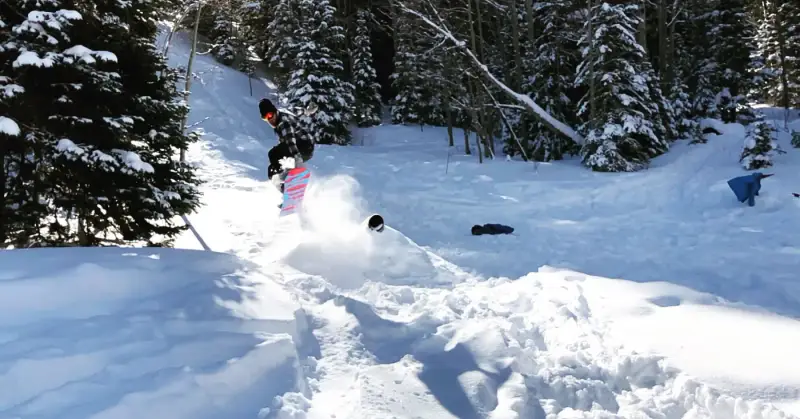
Short answer: to turn on a snowboard, shift your weight to your front foot, then roll from one edge to the other: press your toes for a toeside turn and your heels for a heelside turn. To carve, ride on a tilted edge through the whole turn so the board leaves a thin line instead of skidding, keeping your knees bent and your shoulders lined up with the board.
Turning basics first
Every snowboard turn is a switch from one edge to the other. Your toeside edge is under your toes; your heelside edge is under your heels. Before carving, you need to link smooth, skidded turns on a green or easy blue run. If you're still learning to stop and slide, start with how to snowboard.
How to make a basic turn
- Stand in a relaxed stance: knees bent, weight centered, head up, looking where you want to go.
- Shift weight to your front foot. This is what lets the nose of the board turn downhill. Leaning back makes the board hard to steer.
- Look and rotate toward the turn. Turn your head and shoulders gently in the direction you want to go.
- Change edges. For a toeside turn, press your toes and shins forward. For a heelside turn, lift your toes and press your heels while sitting slightly into the turn.
- Finish across the hill to control speed, then repeat in the other direction.
Skidded turns vs carved turns
In a skidded turn, the board slides sideways for part of the turn, which scrubs speed and feels stable. In a carved turn, the board rides on its edge the whole way, slicing a clean, narrow track. Carving is faster, more efficient, and feels smooth, but it needs good edge control and the right terrain.
How to carve on a snowboard, step by step
- Choose a wide, smooth, groomed run that's well within your ability, with few people on it.
- Get low. Bend your knees and ankles more than you do for skidded turns. A lower stance lets you tilt the board higher on edge.
- Tilt the board, don't twist it. Start the turn by rolling your ankles and knees to put the board on edge, rather than swinging your shoulders to pivot it.
- Commit to the edge. Hold the edge through the whole arc. If the tail washes out, you're probably twisting or not tilting enough.
- Keep your shoulders aligned with the board, not rotated far ahead of it. Quiet upper body, active legs.
- Transition smoothly. At the end of each carve, rise slightly, flatten the board briefly, and roll onto the new edge.
- Check your tracks. Thin, pencil-like lines in the corduroy mean you're carving. A wide smear means you're still skidding.
Drills to build carving skill
- Falling leaf to traverse: practice holding one edge across the hill without skidding.
- Garlands: ride across the slope, start a turn downhill, then return to the same edge. Repeat on both edges.
- Hands on knees: touching your front knee on toeside turns and reaching back on heelside turns keeps you low and centered.
- Wide, open carves: make big C-shaped turns at moderate speed before trying tighter, faster ones.
Board and setup
Camber boards hold an edge well on firm snow and are popular for carving, while rocker and hybrid boards are looser and more forgiving. See camber vs rocker and how to choose a snowboard. A board that's too short can feel unstable at carving speed; check the snowboard size chart.
Stay safe
Carving builds speed, so stay in control and be able to stop at any time. Look uphill before starting a turn across the run, give people below you plenty of room, and carve on runs with good visibility. A lesson is the quickest way to fix habits like leaning back or over-rotating.
FAQ
How do you turn on a snowboard for beginners?
Shift your weight to your front foot, look in the direction you want to go, then roll from your heel edge to your toe edge, or the reverse, and finish each turn across the hill to control speed.
What is the difference between carving and skidding on a snowboard?
A skidded turn slides sideways for part of the turn to scrub speed. A carved turn rides on the edge through the whole arc, leaving a thin track in the snow.
Why does my snowboard skid instead of carve?
Usually because you're twisting the board with your shoulders instead of tilting it on edge, standing too tall, or leaning back. Get lower and roll your ankles and knees to set the edge.